






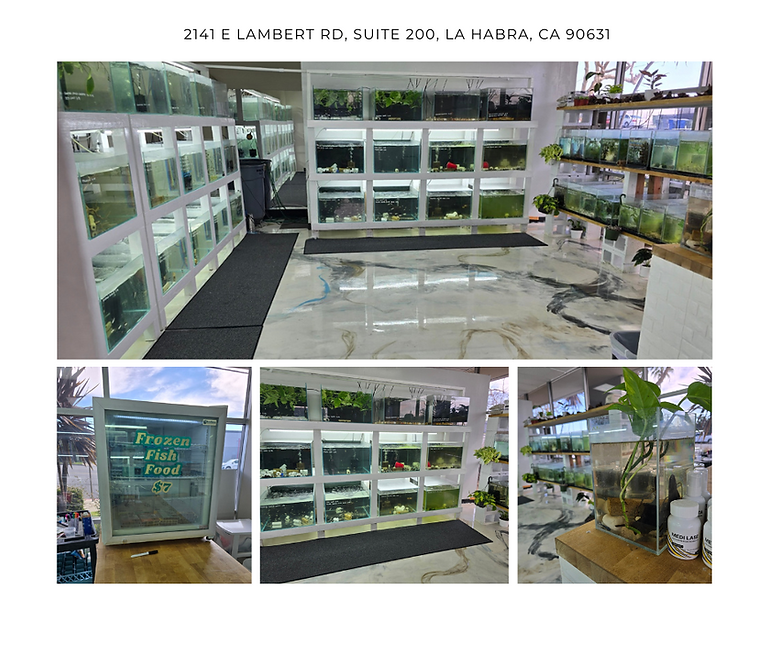
WE ARE MOVING TO NEW LOCATION IN BREA,CA! (501 Mercury Ln.)
WE'RE MOVING TO OUR NEW SPACE IN BREA! 🎉
Our new space will allow us to offer an even bigger selection of fish, shrimp, snails, plants, and aquarium supplies.
📍 Last Day at Our La Habra Store: Thursday, July 16. 2026!
Follow us @swimmingcreaturesinc for updates on our Grand Opening this Fall!
Online orders will continue to ship as usual.
🌐 www.swimmingcreaturesinc.com
🛒 Amazon.com – Swimming Creatures
Thank you for your continued support! ❤️
Water Parameters
Keep it Steady, Stay Safe!
Ensuring a happy home for your fish, shrimp, and crayfish starts with getting the water just right. Let's dive into the key parameters that keep them healthy and thriving.
NEOCARIDINA
-
TDS (Total Dissolved Solids):
-
Ideal Range: 150 to 300 ppm (parts per million)
-
Neocaridina shrimp generally do well in water with moderate TDS levels. It's essential to strike a balance, avoiding extremes in either high or low TDS.
-
-
Temperature:
-
Ideal Range: 68°F to 78°F (20°C to 26°C)
-
Stable and consistent temperature is crucial to prevent stress and promote overall health.
-
-
pH Level:
-
Ideal Range: 6.5 to 7.5
-
Neocaridina shrimp prefer slightly acidic to neutral pH levels.
-
-
GH (General Hardness):
-
Ideal Range: 6 to 10 dGH (degrees of General Hardness)
-
Shrimp require a moderate level of hardness for proper molting and shell development.
-
-
KH (Carbonate Hardness):
-
Ideal Range: 3 to 8 dKH (degrees of Carbonate Hardness)
-
Carbonate hardness helps stabilize pH levels and provides essential minerals.
-
-
Ammonia and Nitrite:
-
Should be at or near zero. Neocaridina shrimp are sensitive to ammonia and nitrite, which can be harmful to their health.
-
-
Nitrate:
-
Keep nitrate levels low, ideally below 20 ppm. Regular water changes help control nitrate accumulation.
-
-
Copper:
-
Ensure that there is no detectable copper in the aquarium water. Copper is toxic to shrimp.
-
FRESHWATER FISHES
-
Temperature:
-
Ideal Range: 72°F to 78°F (22°C to 26°C)
-
Consistent and stable temperatures within this range support the metabolic needs of nano fish.
-
-
pH Level:
-
Ideal Range: 6.5 to 7.5
-
Slightly acidic to neutral pH promotes overall well-being for most nano fish species.
-
-
GH (General Hardness):
-
Ideal Range: 6 to 10 dGH (degrees of General Hardness)
-
A moderate general hardness level supports proper physiological functions.
-
-
KH (Carbonate Hardness):
-
Ideal Range: 3 to 8 dKH (degrees of Carbonate Hardness)
-
Maintaining a stable carbonate hardness helps buffer pH changes.
-
-
Ammonia and Nitrite:
-
Should be at or near zero to prevent stress and health issues in nano fish.
-
-
Nitrate:
-
Ideal Range: Below 20 ppm
-
Regular water changes help control nitrate levels and maintain water quality.
-
-
Copper:
-
Ensure that there is no detectable copper in the aquarium water, as it can be harmful to fish.
-
CARIDINA
-
TDS (Total Dissolved Solids):
-
Ideal Range: 120 to 180 ppm (parts per million)
-
Caridina shrimp, such as Crystal Red Shrimp, prefer slightly lower TDS levels compared to Neocaridina shrimp. Maintaining a stable TDS is crucial for their well-being.
-
-
Temperature:
-
Ideal Range: 72°F to 78°F (22°C to 26°C)
-
Stable and consistent temperature is crucial for Caridina shrimp to prevent stress and promote overall health.
-
-
pH Level:
-
Ideal Range: 6.0 to 7.0
-
Caridina shrimp thrive in slightly acidic to neutral pH levels.
-
-
GH (General Hardness):
-
Ideal Range: 4 to 6 dGH (degrees of General Hardness)
-
Caridina shrimp prefer lower general hardness levels compared to Neocaridina shrimp.
-
-
KH (Carbonate Hardness):
-
Ideal Range: 0 to 2 dKH (degrees of Carbonate Hardness)
-
Caridina shrimp are sensitive to high carbonate hardness, and a low KH helps maintain stable and slightly acidic conditions.
-
-
Ammonia and Nitrite:
-
Should be at or near zero. Caridina shrimp are sensitive to ammonia and nitrite, which can be harmful to their health.
-
-
Nitrate:
-
Ideal Range: Below 10 ppm
-
Keeping nitrate levels low is essential for the health of Caridina shrimp. Regular water changes help control nitrate accumulation.
-
-
Copper:
-
Ensure that there is no detectable copper in the aquarium water. Copper is toxic to shrimp.
-
CRAYFISH
-
TDS (Total Dissolved Solids):
-
Ideal Range: 120 to 140 ppm
-
Maintaining stable TDS levels within this range is beneficial for the health and well-being of crayfish.
-
-
Temperature:
-
Ideal Range: 65°F to 75°F (18°C to 24°C)
-
Crayfish generally prefer slightly cooler temperatures compared to tropical fish.
-
-
pH Level:
-
Ideal Range: 7.0 to 8.0
-
Maintaining a neutral to slightly alkaline pH is suitable for most crayfish species.
-
-
GH (General Hardness):
-
Ideal Range: 6 to 12 dGH (degrees of General Hardness)
-
Crayfish can tolerate a moderate range of general hardness levels.
-
-
KH (Carbonate Hardness):
-
Ideal Range: 3 to 10 dKH (degrees of Carbonate Hardness)
-
A stable carbonate hardness helps maintain proper pH levels for crayfish.
-
-
Ammonia and Nitrite:
-
Should be at or near zero to ensure the health and well-being of crayfish.
-
-
Nitrate:
-
Ideal Range: Below 20 ppm
-
Regular water changes are beneficial for controlling nitrate levels.
-
-
Copper:
-
Ensure that there is no detectable copper in the aquarium water, as it can be harmful to crayfish.
-

Be the first to know
Subscribe to our newsletter to receive news and updates.